
In this article
Laundry detergent is the best-known use of cleaning enzymes, but it is far from the only one. Enzymes are used in floor cleaners, kitchen degreasers, drain and odour products, carpet and upholstery cleaners and industrial clean-in-place (CIP) systems. This article explains how enzymatic cleaning works on hard surfaces and in industry, which enzyme to use for which soil and what formulators need to get right to keep enzymes active in a finished product.
How enzymatic cleaners work
Conventional cleaners remove soil in three main ways: surfactants lift and emulsify it, alkalis and acids attack it chemically, and mechanical action scrubs it off. Enzymes add a fourth route. They catalyse the hydrolysis of large organic molecules, such as proteins, starches and fats, into smaller fragments that dissolve or disperse easily.
Three features make enzymes useful in cleaning:
- Specificity. Each enzyme targets one type of soil, so the formulation can be matched to the job.
- Mild conditions. Enzymes work at moderate pH and temperature, which suits surfaces and users.
- Low dose. Because enzymes are catalysts, a small amount can process a large amount of soil, given enough contact time.
Enzymes do not replace surfactants. They make surfactants more effective by breaking soils into pieces that are easier to lift and rinse away.
Match the enzyme to the soil
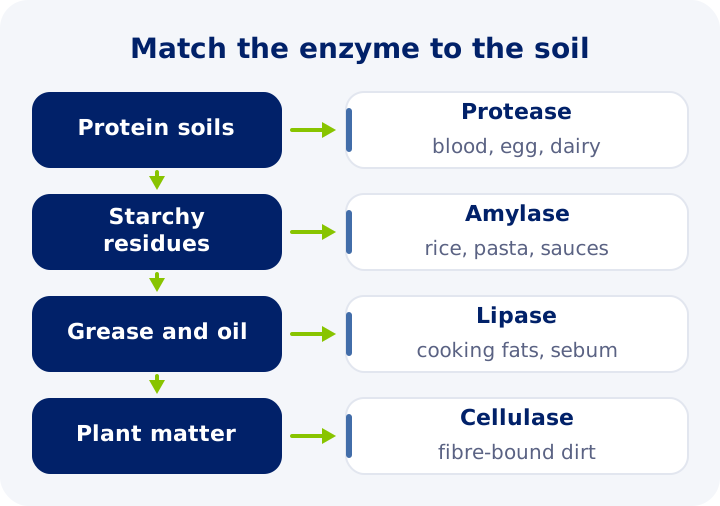
| Soil type | Typical sources | Enzyme | Common cleaning areas |
|---|---|---|---|
| Protein | Blood, egg, dairy, body soils | Protease | Kitchens, food plants, carpets |
| Starch | Rice, pasta, sauces | Amylase | Dishware, food service |
| Fats and oils | Cooking grease, sebum | Lipase | Kitchen floors, hoods, drains |
| Plant matter | Fibre-bound dirt, plant residues | Cellulase | Fabrics, upholstery |
Real soils are mixtures. Kitchen soil, for example, combines fat, protein and starch, so multi-enzyme blends are common. A blend also gives more forgiving performance when the soil is unknown.
Where enzymatic cleaners are used
Floors and hard surfaces
Floors in kitchens, food outlets and factories collect a film of fat and protein that ordinary detergents can leave behind, making floors slippery. An enzymatic floor cleaner breaks this film down so it can be rinsed away. Regular use helps prevent build-up in grout lines and textured flooring.
Kitchens and food service
Lipase-based degreasers tackle cooking oil on surfaces, hoods and drains, while protease and amylase help with food residues. Lipase is particularly useful where hot water and strong alkali are not practical.
Odour control and drains
Many unpleasant odours come from organic residues that bacteria break down. Enzymes remove the source by digesting the residue, which is why they are used in carpet, pet-area and washroom products. Drain maintenance products often combine enzymes with Bacillus spores, which produce enzymes in place over time.
Industrial and clean-in-place systems
In food and dairy plants, enzyme-based cleaning is used for equipment such as membrane filtration systems, where protein and fat fouling must be removed without harsh chemistry that could damage the membrane. Enzymatic cleaning steps are usually combined with conventional alkaline, acid and sanitising steps in a validated programme.
In every setting, remember that enzymatic cleaners remove soil but are not disinfectants. Where hygiene rules require disinfection, it should follow as a separate step. Removing organic soil first also helps the disinfectant work as intended.
Formulating an enzymatic cleaner
Enzymes are proteins, so the formulation must keep them folded and active from production to use.
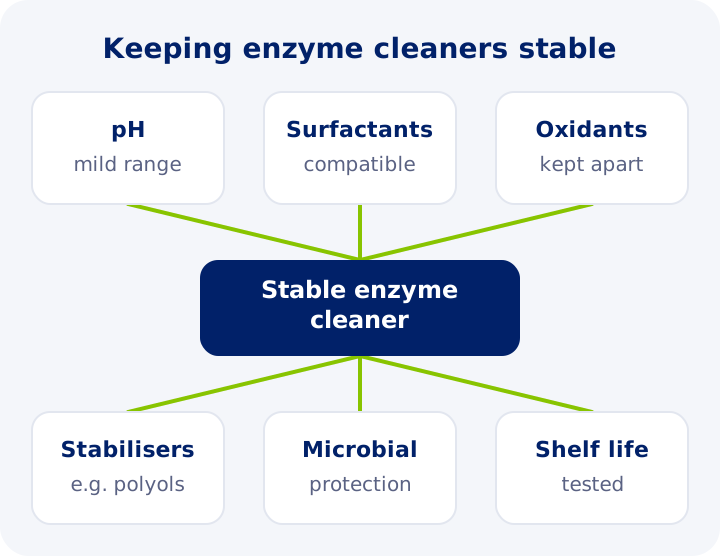
- pH. Most cleaning enzymes have a working range from near neutral to moderately alkaline. Very high or low pH reduces activity and shelf life.
- Surfactants. Non-ionic surfactants are generally enzyme-friendly. Some anionic and cationic surfactants can reduce enzyme stability at high concentrations, so compatibility should be tested.
- Oxidants. Hypochlorite and other strong oxidants inactivate enzymes. Keep them out of the formula or supply them as a separate product.
- Stabilisers. Polyols such as glycerol or propylene glycol, and a small amount of calcium, can help maintain enzyme structure in liquids.
- Preservation. Water-based enzyme products need a compatible preservative system to prevent microbial growth.
- Shelf-life testing. Measure residual enzyme activity during storage, including accelerated testing at elevated temperature.
Proteases are a special case: in liquid products they can digest other enzymes in the same formula, and themselves. Stabilisers and careful pH selection help limit this.
Tip: Write the dwell time into the directions for use. An enzymatic cleaner that is wiped off immediately will not show its full benefit, while a few minutes of contact often makes a visible difference.
Testing an enzymatic cleaner
Good test design shows whether the enzyme is earning its place in the formula:
- Use realistic soils. Prepare test surfaces or swatches with the soils your customers actually face, such as cooked fat, egg or starch residues.
- Include a control. Test the same formula without enzyme, so the enzyme’s contribution is clear.
- Match real use. Apply the dilution, temperature and dwell time given in the directions for use.
- Measure consistently. Use visual grading, reflectance or residue weight, and repeat each test.
- Retest after storage. Repeat cleaning tests on aged samples, since lost enzyme activity shows up first as weaker performance.
Sustainability, honestly assessed
Enzymes are biodegradable proteins and can allow cleaning at lower temperatures with milder chemistry, both of which can reduce environmental impact. A cleaner is not eco-friendly just because it contains enzymes, though. The whole formulation, including surfactants, solvents, fragrances and packaging, determines its footprint. Environmental claims on finished products should be backed by evidence and meet the rules of each market.
Working with Enzyme Bioscience
Enzyme Bioscience supplies proteases, amylases, lipases, cellulases and ready-to-use enzymatic cleaning products in our detergent enzyme range, manufactured in Surat, India under ISO 9001:2015. For laundry applications, see our article on enzyme detergents. Request a sample, TDS or CoA to start formulation trials.
Frequently asked questions
Enzymatic cleaners contain enzymes that break specific organic soils into smaller molecules. Proteases break down proteins, amylases break down starch and lipases break down fats. The smaller fragments dissolve or disperse more easily and are removed by surfactants and rinsing.
Yes. Enzymes work by catalysing reactions, which takes time, so a short contact period before wiping or rinsing usually improves results. The ideal dwell time depends on the soil, temperature and enzyme level, and should be stated in the product's directions for use.
Generally no. Chlorine bleach and strong oxidants denature enzymes and destroy their activity. If both disinfection and enzymatic cleaning are needed, they are usually carried out as separate steps or supplied as separate products.
Many odours come from organic residues such as food, urine or body soils that bacteria break down into smelly compounds. Enzymes break those residues down so they can be removed, which addresses the source rather than masking the smell. Some drain and odour products also contain Bacillus spores that produce enzymes in place.
Finished enzymatic cleaners are widely used in homes and workplaces. Concentrated enzymes, however, are proteins that can cause respiratory sensitisation if inhaled as dust or aerosol, so manufacturers should handle raw enzymes with appropriate controls and avoid formulations that create fine sprays of concentrated enzyme.