In this article
Fungal diastase and alpha-amylase are often presented as two competing enzymes, but that is a misunderstanding. Fungal diastase is itself a source of alpha-amylase. The useful comparison is between amylases from different organisms, fungal versus bacterial, and between pharmaceutical, food and industrial grades. This guide explains the chemistry, sets out the practical differences and shows which type suits each application.
Clearing up the terminology
“Diastase” is a historical term for the starch-digesting activity first extracted from malted barley. Malt diastase contains a mix of alpha-amylase and beta-amylase. Fungal diastase is a preparation from the mould Aspergillus oryzae, and its main activity is alpha-amylase.
Alpha-amylase (EC 3.2.1.1) is the name of the enzyme class, not of one product. Plants, animals, fungi and bacteria all make alpha-amylases. They share the same basic reaction but differ in temperature tolerance, pH preference and the sugars they produce. Those differences decide where each one is used.
How alpha-amylase breaks down starch
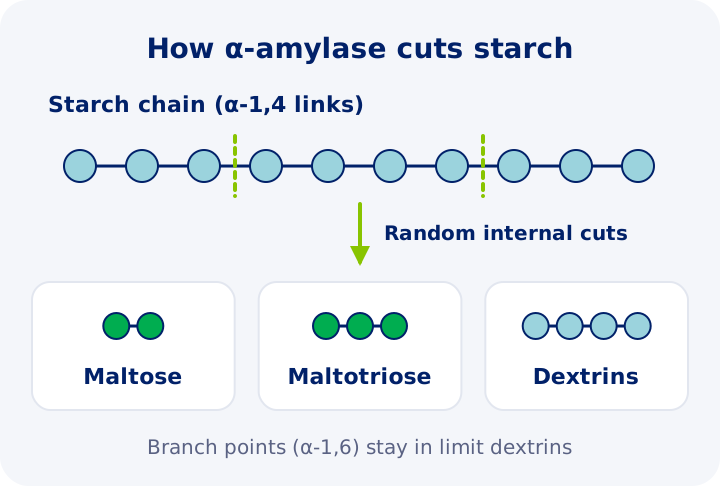
Starch is made of two glucose polymers. Amylose consists of long, mostly straight chains joined by alpha-1,4 links. Amylopectin is branched, with alpha-1,6 links at the branch points. Alpha-amylase is an endo-acting enzyme, which means it cuts alpha-1,4 links at random points inside the chain rather than working from the ends.
Because it cuts inside the chain, alpha-amylase quickly reduces the viscosity of a starch paste. This effect is called liquefaction. It releases a mixture of dextrins, maltose and maltotriose. It cannot cut the alpha-1,6 branch points, so branched fragments called limit dextrins remain.
Other starch enzymes work differently. Glucoamylase removes single glucose units from the chain ends, while beta-amylase removes maltose units. In starch processing they are often used after alpha-amylase to finish the job.
Fungal versus bacterial alpha-amylase
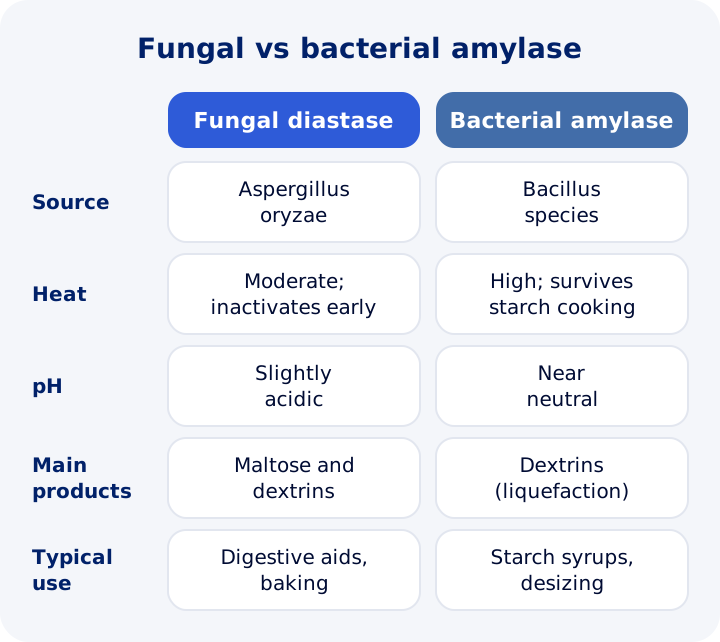
The two most common commercial sources of alpha-amylase are Aspergillus oryzae and Bacillus bacteria. Their behaviour differs enough that one rarely replaces the other directly.
| Feature | Fungal diastase / fungal amylase | Bacterial alpha-amylase |
|---|---|---|
| Source organism | Aspergillus oryzae | Bacillus species |
| Heat tolerance | Moderate; inactivates relatively early | High; thermostable types survive starch cooking |
| pH preference | Mildly acidic | Around neutral, varies by type |
| Main products | Maltose, maltotriose, dextrins | Mainly dextrins (liquefying) |
| Typical grades | Pharmaceutical (IP), food, feed | Food, feed, textile |
| Typical uses | Digestive aids, baking | Starch syrups, brewing adjuncts, desizing |
Choosing by application
Digestive formulations
For syrups, tablets and capsules, the pharmacopoeial grade is what matters. Fungal Diastase IP is produced and tested to the Indian Pharmacopoeia monograph. It is often combined with pepsin so that the formulation covers both starch and protein. Bacterial amylases are generally supplied in food or industrial grades and are not the usual choice here. Where the formulation also contains pepsin or other proteases, check that the amylase keeps its activity over shelf life, because proteases can slowly degrade it, especially in syrups.
Baking
In baking, fungal amylase is the standard choice. It produces sugars that feed the yeast, which supports gas production, crust colour and dough handling. Because it loses activity as the loaf heats, it stops before it can over-soften the crumb. A highly heat-stable bacterial amylase can keep working during baking and leave a sticky, gummy crumb. Our fungal amylase is supplied for these food applications.
Starch processing and brewing
When starch is cooked to make syrups or brewing adjuncts, the enzyme must work at high temperature. Thermostable bacterial amylase is used to liquefy the cooked starch. Glucoamylase or other saccharifying enzymes then convert the dextrins into glucose or maltose syrups.
Brewing follows a similar logic. Malt brings its own alpha- and beta-amylases, which convert starch during mashing. Added microbial amylases are used mainly when brewers include unmalted adjuncts such as rice or maize, whose starch needs cooking and liquefying first.
Textile desizing
Woven fabrics are often coated with starch size to protect the yarn during weaving. Before dyeing, that size must be removed. Bacterial amylases are widely used for this because they work well at the temperatures used in desizing baths. After desizing, the fabric is washed so that the broken-down starch is removed before scouring and dyeing.
Can they be used together?
Yes, and often they are, but in sequence rather than as substitutes. In starch processing, a bacterial amylase liquefies and other enzymes saccharify. In digestive blends, fungal diastase sits alongside proteases and lipases so that the product covers several food components. Some baking improvers combine fungal amylase with other enzymes to manage freshness and texture.
Tip: Fungal amylase is often specified in SKB units, bacterial amylase in BAU, and pharmacopoeial grades by their own assay. Because these methods differ, switch between sources only after an application trial, not by converting units on paper.
Questions to answer before you choose
A short list of questions usually settles which amylase fits a project:
- Conditions: what temperature and pH will the enzyme see, and for how long?
- End products: do you need lower viscosity, fermentable sugars or glucose?
- Grade: does your regulator or customer require IP, food or industrial material?
- Activity: how is activity measured, and can it be checked in your own matrix?
- Inactivation: does the enzyme need to stop at the end of the process, and how will that happen?
- Partners: will other enzymes, especially proteases, share the same formulation?
Answering these before you request samples saves trial time. It also helps the supplier propose the right grade first time.
For more detail on the pharmaceutical grade, including production and formulation, read our guide to fungal diastase and digestion.
Working with Enzyme Bioscience
We produce fungal diastase in IP grade, plus fungal and bacterial amylases for food, feed and textile uses. That means one supplier can support trials across several applications. Request samples, TDS and CoA for the grades you want to compare.
Frequently asked questions
Fungal diastase is an enzyme preparation from Aspergillus oryzae whose main activity is alpha-amylase. So it is a type of alpha-amylase rather than a separate enzyme. The practical differences are between amylases from fungal and bacterial sources, and between pharmaceutical, food and industrial grades.
Bacterial alpha-amylases, especially thermostable types from Bacillus species, tolerate much higher temperatures than fungal amylase. That is why they are used to liquefy starch during cooking, while fungal amylase is chosen where early inactivation is useful, as in baking.
Fungal diastase IP is the grade most commonly used in Indian digestive syrups, tablets and capsules, often alongside pepsin. It is produced and tested to the Indian Pharmacopoeia monograph, which is what pharmaceutical manufacturers need for their dossiers.
Fungal amylase supplies sugars for yeast and improves dough handling, then loses activity as the loaf heats during baking. This limits further starch breakdown in the crumb. A highly heat-stable bacterial amylase can keep working too long and give a sticky crumb.
No. Fungal amylase is often specified in SKB units and bacterial amylase in BAU, and pharmacopoeial grades use their own assay. These methods use different conditions and definitions, so dose comparisons must be made through application trials.