
In this article
Before a hide can be tanned, almost everything except its collagen fibre network has to be removed: dirt, salt, blood, dung, hair, epidermis, fat and soluble proteins. In other words, the beamhouse is a large cleaning operation. Traditionally that cleaning has relied on lime, sodium sulphide, ammonium salts, solvents and plenty of water. Leather enzymes do much of the same work more selectively and under milder conditions, which is why they are central to cleaner leather production.
What leather enzymes are
Leather enzymes are mainly microbial proteases, lipases and amylases that act on the non-collagenous parts of the hide:
- Proteases break down soluble proteins, keratin-related material around the hair root, and other unwanted proteins.
- Lipases break down natural fats in the hide or skin.
- Amylases and other carbohydrases act on carbohydrate material and help open up the fibre structure.
The challenge is selectivity. Collagen is itself a protein, so the enzyme must clean the hide without attacking the fibres that become the leather. That is why choosing the right enzyme, dose, pH and time matters so much.
Where enzymes work in the beamhouse
Soaking
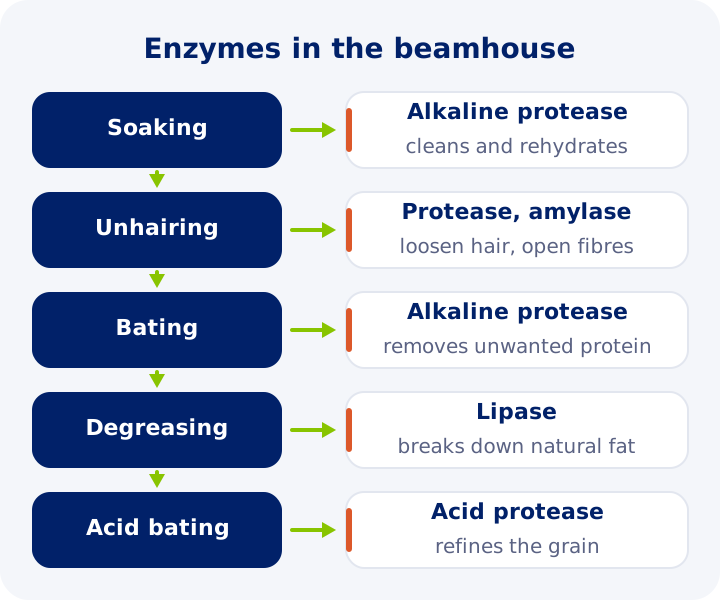
Soaking rehydrates cured hides and removes salt, dirt and soluble proteins. Adding an alkaline protease for soaking speeds up water uptake and helps remove interfibrillary proteins, so hides soak more evenly and in less time. This is especially helpful for heavily dried or salted stock.
Unhairing and fibre opening
Conventional unhairing dissolves hair with lime and sodium sulphide, which creates a heavy effluent load and a risk of hydrogen sulphide gas. Enzyme-assisted unhairing uses proteases to attack the hair root and surrounding tissue, so less sulphide is needed. In hair-saving systems the loosened hair is filtered out rather than dissolved, further lowering the effluent load.
Amylase can support this stage by acting on carbohydrate material in the hide, helping open up the fibre structure for later chemicals. An amylase for leather is used for this purpose.
Bating
After deliming, bating removes residual non-collagenous proteins, hair roots and pigment debris from the pelt. This gives a cleaner, flatter grain and a softer, more pliable leather. Bating was historically done with animal pancreatic enzymes; today, microbial alkaline protease bates give more consistent activity.
Degreasing
Natural fat, especially in sheepskins and some goat skins, can cause uneven dyeing, fatty spue and adhesion problems in finishing. Lipase breaks down these fats so they can be emulsified and washed out, reducing the need for solvents and heavy surfactant use.
Acid bating of pickled pelts and wet blue
Some proteases work at low pH. An acid bate can be applied to pickled pelts or wet blue to improve grain cleanliness and softness at a later stage, for example with stored pickled stock or imported wet blue.
Conventional and enzymatic cleaning compared
| Stage | Conventional approach | Enzyme used | What the enzyme removes |
|---|---|---|---|
| Soaking | Water, wetting agents, long times | Alkaline protease | Soluble proteins, dirt |
| Unhairing | Lime and sodium sulphide | Protease, amylase | Hair roots, carbohydrate material |
| Bating | Ammonium salts, pancreatic bates | Alkaline protease | Residual non-collagen proteins |
| Degreasing | Solvents, surfactants | Lipase | Natural fats |
| Pickle or wet blue | Often no extra step | Acid protease | Grain debris |
The green case for enzymes
The environmental advantages come mainly from reducing the harshest chemistry:
- Less sulphide. Lower sulphide use reduces hydrogen sulphide risk and sulphide in effluent.
- Lower effluent load. Hair-saving unhairing and reduced chemical use can cut the organic and nitrogen load sent to treatment.
- Fewer solvents. Lipase degreasing reduces reliance on solvent-based degreasing.
- Better working conditions. Milder processes are safer for beamhouse workers.
The size of these benefits depends on the tannery’s raw material, equipment and existing process, so improvements should be measured locally.
Controlling enzyme action on hides
Over-active enzyme treatment can damage the grain or make leather loose and empty, so control is essential:
- Set conditions precisely. Temperature, pH, float length and time all change enzyme activity.
- Match dose to raw material. Bovine hides, goat skins and sheepskins respond differently.
- Check progress. Tannery staff commonly test bated pelts by feel and by checking how readily air passes through a pinched fold of pelt; record results to standardise the process.
- Trial first. Start on a small number of sides before moving to full packs.
Tip: When introducing an enzyme bate, run half-hide trials with the existing process on one side and the enzyme process on the other. This removes much of the natural variation between hides from the comparison.
Storage and handling
Enzymes slowly lose activity over time, and faster in heat or humidity. Store drums closed, in a cool, dry place away from direct sun, and use stock in order of receipt. Concentrated enzyme powders can cause respiratory sensitisation if inhaled, so avoid creating dust when weighing and adding them to the drum, and use the personal protective equipment recommended in the safety data sheet. Dissolving or dispersing powder enzymes in water before adding them to the float also helps even distribution.
Choosing leather enzymes
Consider the stage and its pH (alkaline for soaking, liming and bating; acidic for pickle and wet blue), the raw material, the leather article (shoe upper, garment, upholstery) and the equipment. Consistent activity from batch to batch matters as much as the activity level itself. When comparing products, ask for the activity definition, the recommended pH and temperature range, guidance on compatibility with your wetting, deliming and degreasing agents, and a CoA for each batch you trial.
Working with Enzyme Bioscience
Enzyme Bioscience manufactures soaking, bating, acid bating and amylase products in our leather enzyme range at its ISO 9001:2015-certified plant in Surat, India, with in-house R&D and QC labs. Products are supplied in 25 or 50 kg HDPE drums. Request a sample, TDS or CoA to run trials on your own hides.
Frequently asked questions
Leather enzymes are proteases, lipases and amylases used in the beamhouse to clean raw hides and skins before tanning. They break down non-collagenous proteins, fats and carbohydrate material that would otherwise affect the quality of the finished leather. They are produced mainly by microbial fermentation.
Bating is the step after deliming in which proteolytic enzymes remove remaining non-collagenous proteins and other debris from the pelt. It gives a cleaner, flatter and softer grain and improves the feel of the finished leather. Bating was historically done with pancreatic enzymes; microbial proteases are now widely used.
Enzymes can reduce the amount of sulphide needed, and enzyme-assisted hair-saving processes loosen hair at the root so it can be removed rather than dissolved. Fully sulphide-free unhairing is possible but needs tight process control and is not yet standard in most tanneries. Trials on your own raw material are essential.
Hides and especially sheepskins contain natural fat, which can cause uneven dyeing, fatty spue and finishing problems if it is not removed. Lipase breaks down these fats so they can be washed out, reducing reliance on solvents and large amounts of surfactant.
Acid bating uses acid proteases that work at low pH, such as on pickled pelts or wet blue. It can improve grain cleanliness and softness at a later stage, which is useful when the earlier bate was not sufficient or for stored pickled stock. Conditions and dose should follow the product TDS.