In this article
Enzymes and probiotics are often sold side by side, but combining them in one product gives formulators a clearer story and a more convenient format. This article explains what each ingredient does, which pairings make technical sense, where combined products go wrong in development, and how to turn the combination into a selling point that stays within health-claim rules.
Two ingredients with two different jobs
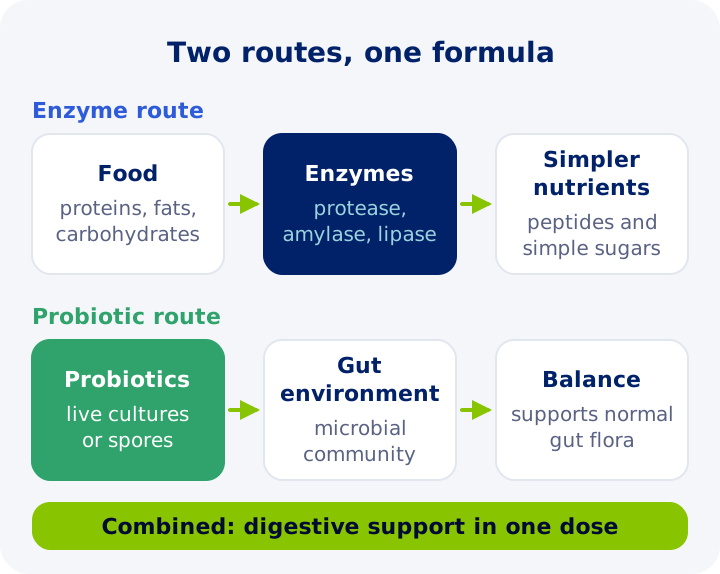
Enzymes are proteins that catalyse specific reactions. In a digestive formula they act on food: protease breaks proteins into peptides, amylase breaks starch into dextrins and sugars, lipase releases fatty acids from fats, and lactase splits lactose into glucose and galactose. Their strength is measured as activity in defined units, not by weight.
Probiotics are live microorganisms which, when administered in adequate amounts, confer a health benefit on the host. This widely used definition comes from FAO/WHO expert guidance. Common examples are lactobacilli, bifidobacteria and spore-forming Bacillus species. Their strength is expressed as colony-forming units (CFU), and their effects are specific to each strain.
Why the combination makes sense
The two ingredients work at different points and on different targets, so they complement rather than duplicate each other. Enzymes help break down food, which may support digestive comfort after meals. Probiotics are used in formulations for maintaining a balanced gut microbiota.
There is also overlap at the microbial level. Many lactic acid bacteria produce their own enzymes; yoghurt cultures, for example, produce beta-galactosidase, which is why live yoghurt cultures are associated with easier lactose digestion. This is one reason lactase and lactic acid bacteria are a natural pairing in dairy-comfort products.
For the end user, the main benefit is simplicity: one capsule or sachet instead of two products. For the brand, it is a product that is easy to explain and harder to copy than a single-ingredient commodity.
Enzyme source also shapes positioning. Microbial enzymes from fungal or bacterial fermentation and plant enzymes such as papain and bromelain suit vegetarian and vegan products, while animal-derived pancreatin is used mainly in pharmaceutical digestive aids. Pairing microbial enzymes with plant-based capsule shells and dairy-free probiotic carriers allows a fully vegetarian claim, which matters in many markets, including India. Check Halal and Kosher status for each component where those certifications are part of the brief.
Common enzyme and probiotic pairings
The enzyme choice should follow the food the product is meant to help with. The table below shows typical starting points.
| Enzyme | Substrate | Role in the formula | Typical product |
|---|---|---|---|
| Protease | Proteins | Breaks proteins into peptides | Protein powders, sports blends |
| Amylase | Starch | Breaks starch into dextrins and sugars | Broad digestive capsules |
| Lipase | Fats | Releases fatty acids and glycerol | Broad digestive capsules |
| Lactase | Lactose | Splits lactose into glucose and galactose | Dairy-comfort formulas |
| Alpha-galactosidase | Raffinose-type sugars in legumes | Breaks down bean sugars | Legume and meal-comfort blends |
For a dairy-comfort product, for example, lactase can be paired with lactic acid bacteria. For protein powders, a protease is often combined with a spore-forming strain such as Bacillus coagulans, which tolerates powder processing well.
Where combination products go wrong
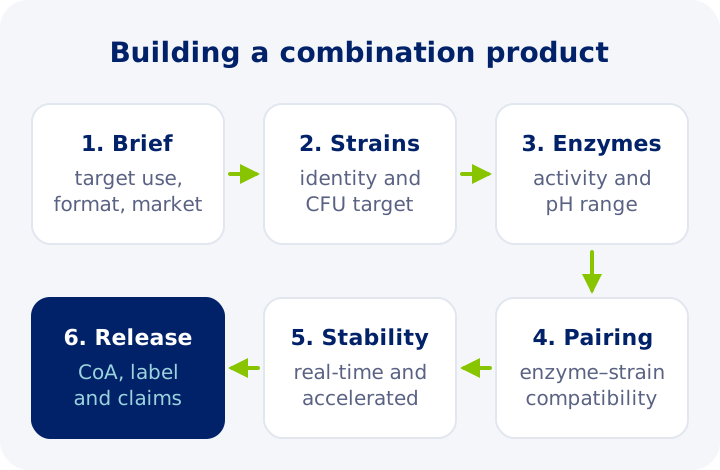
A combination formula is only as good as its weakest component at the end of shelf life. Four issues cause most failures.
Moisture
Dry enzymes and dried probiotic cultures are both stable mainly because they lack free water. Hygroscopic excipients, humid filling rooms or permeable packaging can raise water activity, which reduces CFU counts and can allow enzyme activity to start in the pack. Control moisture at every step and choose low-moisture capsule shells where possible.
pH and gastric transit
Each enzyme has a pH range in which it works best. Fungal enzymes generally tolerate acidic conditions, while pancreatic-type enzymes work at near-neutral pH and are often enteric-coated to pass through the stomach. Probiotic strains also differ in acid tolerance, so spore-formers or protective encapsulation are used where survival matters.
Ingredient interactions
In liquid or high-moisture formats, proteases can act on other protein ingredients, and some minerals or acidic botanicals can reduce probiotic viability. Screen every active and excipient in the final matrix, not in isolation.
Assays and overages
Both components need their own assay: enzyme activity in defined units and probiotic counts in CFU. Overages should be set from stability data at the storage conditions of the target market. Use the enzyme dosage calculator as a starting point, then confirm the enzyme dose with trials in your own matrix.
Where combination products are used
- Dietary supplements: capsules, sachets and chewables positioned for digestive support.
- Functional foods: protein shakes, cereals and dairy products, where spore-forming strains suit heat or long shelf life.
- Animal nutrition: feed enzymes such as phytase and xylanase are often used alongside Bacillus-based direct-fed microbials in poultry and swine diets.
- Pharmaceutical products: co-formulated digestive aids, subject to local registration rules for each market.
Tip: Run stability studies on the finished combination, not on each ingredient alone. Excipients, fill weight and pack type change how both components behave.
Turning synergy into a selling point
The most persuasive combination products explain the mechanism simply and back it with specification. Useful approaches include:
- A one-line explanation on pack, such as “enzymes help break down food; probiotics support a balanced gut microbiota”, adjusted to the wording allowed in each market.
- Full disclosure of enzyme activities and strain designations, which signals quality to informed buyers and professionals.
- A CFU count guaranteed to the end of shelf life, not just at manufacture.
- Distinct product lines for distinct needs, for example dairy comfort, protein digestion or legume-rich diets, rather than one product claiming everything.
Avoid wording that suggests the product treats, cures or prevents any disease. Claims about immunity, energy or long-term health need their own evidence and must fit the rules of each target market.
Working with Enzyme Bioscience
Enzyme Bioscience manufactures enzymes and probiotic strains in an FDA-registered, GMP and ISO 9001:2015 certified facility in Surat, India. Through our ENZYVIVE® custom-blend service we can help you match enzyme activities and strains to your format. Request samples, a TDS or a CoA to start bench trials.
Frequently asked questions
It describes combining digestive enzymes and probiotic strains in one product so that each does its own job. Enzymes break down proteins, starch, fats or lactose in food, while probiotics are live microorganisms that may support a balanced gut microbiota. Together they give a single, convenient digestive-support formula.
Yes. In a dry powder or capsule both ingredients are largely inactive until they meet moisture, so they can usually be co-formulated. The key controls are low water activity, compatible excipients and protective packaging, confirmed by real-time stability testing.
In a properly dried blend, interaction is minimal because enzymes need water to work. In liquids or high-moisture formats the risk rises, so check viability and enzyme activity over shelf life. Spore-forming strains such as Bacillus coagulans are generally more robust in demanding formats.
Common choices are protease, amylase, lipase, lactase and alpha-galactosidase, matched to the food the product is meant to help digest. The right pairing depends on the target use, the format and the market, so start from a clear product brief.
State each enzyme by name and activity, and each probiotic by genus, species and strain with the count guaranteed to the end of shelf life. Use wording such as 'may support digestion' that is permitted in the target market, and avoid any claim to treat or prevent disease.