In this article
- What is phytate and why can’t pigs and poultry use it?
- How does phytase release phosphorus?
- What are the benefits of phytase in feed formulation?
- How do poultry and swine applications differ?
- Why do thermostability and pelleting matter?
- How should you evaluate a phytase?
- How is phytase dosed?
- Working with Enzyme Bioscience
Phytase is a feed enzyme that breaks down phytate, the main storage form of phosphorus in plant ingredients, so that pigs and poultry can absorb more of the phosphorus already in their diet. Using it lets nutritionists reduce added inorganic phosphate and lowers the amount of phosphorus excreted in manure. The right product and dose depend on the diet, species, pelleting conditions and the activity method used, and are confirmed by trials.
What is phytate and why can’t pigs and poultry use it?
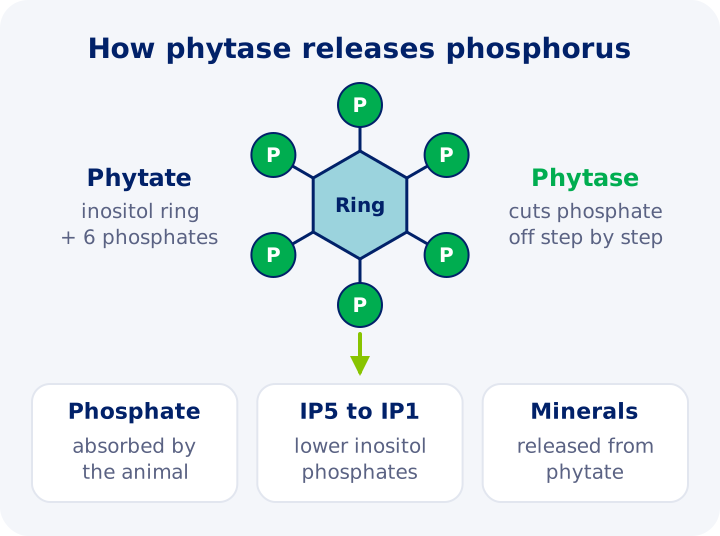
Phytic acid is myo-inositol hexakisphosphate, often shortened to IP6: a six-carbon inositol ring carrying six phosphate groups. Its salt form, phytate, is how plants store phosphorus in seeds. Cereals such as maize and wheat, brans and oilseed meals such as soybean meal hold a large share of their phosphorus in this form.
Pigs and poultry are monogastric animals with limited phytase activity of their own. Much of the phytate phosphorus therefore passes through the gut unused. Ruminants are different, because their rumen microbes produce phytase.
Phytate also has antinutritional effects. Its negatively charged phosphate groups bind minerals such as calcium, zinc and iron, and it can form complexes with protein. This can reduce the availability of these nutrients as well as phosphorus.
How does phytase release phosphorus?
Phytase is a hydrolase that removes phosphate groups from the inositol ring one at a time. Each step releases inorganic phosphate and leaves a lower inositol phosphate (IP5, then IP4 and so on). Lower inositol phosphates bind minerals less strongly than IP6, so breaking phytate down further also frees calcium and trace minerals.
Commercial phytases are produced by microbial fermentation. They are often described as 3-phytases or 6-phytases, depending on where on the ring they start removing phosphate. They also differ in pH profile and heat stability, which affects how they perform in the animal and in the feed mill.
Most of this activity happens in the upper digestive tract, where conditions are acidic and phytate is soluble. In poultry that means the crop, proventriculus and gizzard; in pigs, mainly the stomach. A phytase that stays active at low pH and resists the animal’s own proteases has more opportunity to work before feed moves on.
What are the benefits of phytase in feed formulation?
Nutritionists usually give phytase a “matrix value”: an estimate of the available phosphorus, and often calcium, that a given dose contributes. Some suppliers also provide values for amino acids and energy. These values are product-specific and should be supported by trial data.
| Benefit | What happens | Why it matters |
|---|---|---|
| More available phosphorus | Phytate phosphorus is released and absorbed | Less inorganic phosphate (e.g. MCP, DCP) needed |
| Minerals released | Calcium and trace minerals are freed from phytate | Better use of minerals already in the diet |
| Formulation flexibility | Matrix values free space and cost in the formula | More room for other ingredients |
| Lower manure phosphorus | Less undigested phosphorus is excreted | Easier nutrient management on farms |
| Less mined phosphate | Plant phosphorus replaces part of the mineral source | Reduces reliance on a finite resource |
Environmental benefits
Phosphorus that is not absorbed ends up in manure. When manure is spread on land beyond what crops can use, phosphorus can reach rivers and lakes and contribute to algal growth. Many regions regulate nutrient loads from livestock farms. Phytase lowers manure phosphorus at the source, which is why it is one of the most widely used feed enzymes. It also reduces dependence on phosphate rock, a finite resource.
How do poultry and swine applications differ?
The principle is the same in both species, but digestive physiology and production systems differ.
| Factor | Poultry | Swine |
|---|---|---|
| Main site of action | Crop, proventriculus, gizzard | Stomach |
| Transit time | Short, so fast action matters | Longer |
| Typical feed form | Pellets or crumbles for broilers; mash common for layers | Pellets, mash or liquid feed |
| Production stages | Broilers, layers, breeders | Piglets, growers, finishers, sows |
| Special points | Layers need high calcium for eggshell | Needs differ from piglet to sow |
In both species, the dietary calcium level affects the phytase response. Calcium can form complexes with phytate that are harder for the enzyme to break down, so phosphorus and calcium should be formulated together.
Why do thermostability and pelleting matter?
Most poultry feed and much pig feed is pelleted. Before pelleting, the mash is steam-conditioned, which exposes it to heat and moisture for a short time. Friction in the pellet die adds more heat. These conditions can inactivate an unprotected enzyme.
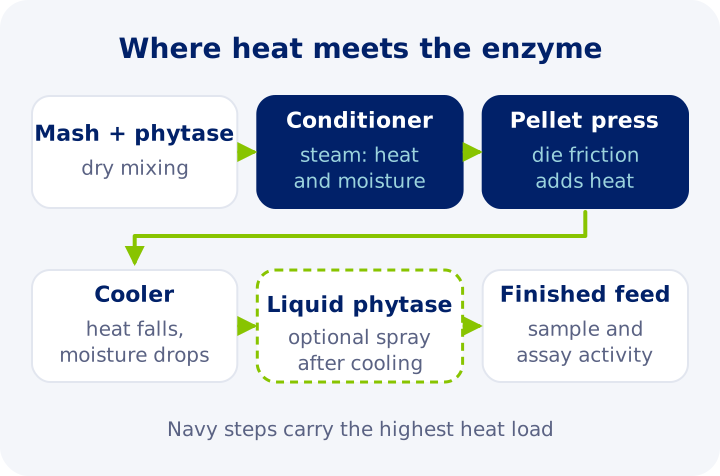
There are three common ways to protect activity:
- Thermostable phytases are enzymes that naturally, or through development, keep more activity at high temperature.
- Coated or granulated products use a protective layer that slows heat and moisture uptake during conditioning.
- Post-pellet liquid application sprays a liquid phytase onto pellets after the cooler, so the enzyme never passes through the conditioner.
Whichever route you choose, ask for recovery data at conditions close to your own mill’s and sample finished feed to confirm the activity actually delivered.
How should you evaluate a phytase?
Feed phytase is usually declared in FTU, generally defined as the amount of enzyme that releases 1 µmol of inorganic phosphate per minute from sodium phytate under stated pH and temperature conditions. Standardised methods for measuring phytase in feed exist (for example ISO 30024), but suppliers may also use their own unit names or conditions. As with any enzyme unit, a number is only comparable with another number from the same method. Our guide to enzyme activity units explains why.
Questions to ask when comparing products:
- Which assay method and conditions define the declared activity?
- How active is the enzyme at the low pH of the stomach or gizzard?
- What recovery does it show after conditioning at your temperature and time?
- Is it a powder, granule or liquid, and does that suit your mill?
- Which matrix values are proposed, and what trial data support them?
- How stable is it in premix and feed during storage?
Tip: Premixes containing choline chloride, trace minerals or acids can be harsh on enzymes. Check storage stability in your actual premix, not just in the pure product.
How is phytase dosed?
Phytase dose is usually expressed in activity units per kg of complete feed. It depends on the species and age, the phytate content of the diet, calcium and phosphorus levels, and how much phosphorus you want to release. Some nutritionists use higher doses than standard to break phytate down further; whether that pays depends on the diet and economics, and should be tested.
The arithmetic is the same as in our enzyme dosage calculator. In an illustrative example, a target of 500 FTU per kg of feed, a product declared at 5,000 FTU/g and a 1,000 kg batch give:
- Enzyme (g) = units per kg feed × kg feed ÷ product activity
- 500 × 1,000 ÷ 5,000 = 100 g per tonne
These numbers are only an example, not a recommendation.
What should a phytase trial measure?
A typical trial compares at least three diets: a positive control with normal phosphorus and calcium, a negative control with reduced phosphorus and calcium, and the negative control with phytase added. If the phytase diet performs like the positive control, the enzyme has replaced the phosphate that was removed. Useful measures include phosphorus digestibility, bone or toe ash, growth and feed conversion, and phosphorus in manure. Analyse the finished feed for phytase activity as well, so you know the dose the animals actually received.
Phytase is also often combined with xylanase or protease; our article on feed enzymes for livestock covers these.
Working with Enzyme Bioscience
Enzyme Bioscience supplies phytase alongside xylanase, protease and other feed enzymes, and can combine them in an ENZYVIVE® custom blend for your diet. Each product comes with a TDS and a batch CoA from our in-house QC lab. Request a sample and TDS to start your own pelleting and performance trials.
Frequently asked questions
Phytase is an enzyme that removes phosphate groups from phytate, the form in which most phosphorus is stored in cereals, brans and oilseed meals. Pigs and poultry produce little phytase of their own, so much of this phosphorus would otherwise pass through undigested. Added phytase makes it available for absorption, which reduces the need for inorganic phosphate supplements.
Ruminants such as cattle and sheep have rumen microbes that produce phytase and break down phytate before it reaches the small intestine. Pigs and poultry are monogastric animals with limited phytase activity of their own. That is why phytase is a standard feed enzyme for pig and poultry diets.
FTU is the activity unit most often used for feed phytase. It is generally defined as the amount of enzyme that releases 1 micromole of inorganic phosphate per minute from sodium phytate under stated pH and temperature conditions. Methods and conditions differ between suppliers, so FTU values from different products are not always directly comparable.
Steam conditioning and pelleting expose feed to heat and moisture, which can inactivate unprotected enzymes. Thermostable phytase variants, coated or granulated products and liquid phytase sprayed onto pellets after cooling are the main ways to protect activity. Ask suppliers for recovery data at conditions similar to your mill's, and test finished feed.
The dose depends on the species, age, diet composition, calcium and phosphorus levels, the product's activity and the amount of phosphorus you want to release. It is set from the supplier's trial data and confirmed by your own trials. Our enzyme dosage calculator converts a target in units per kg of feed into grams of product per tonne.
When phytase releases phosphorus already present in the feed, less inorganic phosphate needs to be added and less phosphorus is excreted in manure. Lower manure phosphorus reduces the risk of nutrient run-off into rivers and lakes. It also reduces reliance on mined phosphate, which is a finite resource.