
In this article
Mental wellness used to be discussed almost entirely in terms of the brain. Research over the past two decades has shown that the gut and its microbes take part in a constant two-way conversation with the brain, and that finding is now shaping a new category of wellness products. This article explains the science in plain terms and shows how to build gut-brain products that are credible and compliant.
What the gut-brain axis is
The gut-brain axis is the communication network between the central nervous system (the brain and spinal cord) and the enteric nervous system, the dense mesh of nerve cells that lines the digestive tract. The enteric system is sometimes called the “second brain” because it can control many gut functions on its own.
When researchers include the role of gut bacteria, they speak of the microbiota-gut-brain axis. Signals travel in both directions: stress can change gut function, and the gut and its microbes send signals that the brain responds to.
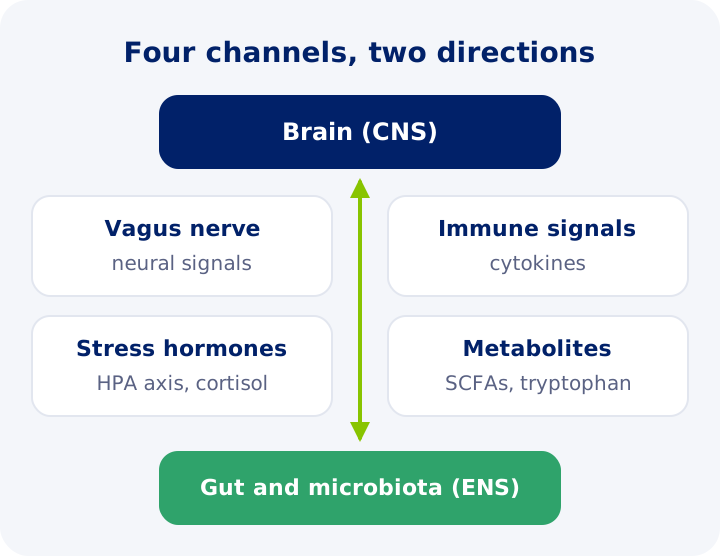
The four communication channels
| Channel | Main messengers | What research looks at | Relevance for formulators |
|---|---|---|---|
| Vagus nerve | Neural signals | Gut-to-brain signalling | Strain data showing vagal involvement |
| Immune system | Cytokines | Links between immune signalling and mood | Gut barrier and immune-related end-points |
| Stress hormones | HPA axis, cortisol | How the stress response affects the gut and vice versa | Stress-support positioning |
| Microbial metabolites | SCFAs, tryptophan metabolites, GABA | Molecules produced by gut bacteria | Fibre, prebiotics and strain metabolism |
No single channel explains the whole system. A strain may act through more than one route, and many mechanisms are still being worked out.
Serotonin: a commonly misunderstood fact
Most of the body’s serotonin is produced in the gut, mainly by enterochromaffin cells in the intestinal lining. This fact is often used in marketing to suggest that the gut makes the brain’s “happy chemical”. In reality, gut serotonin does not cross the blood-brain barrier; it acts on gut movement and local signalling. Gut microbes can influence tryptophan metabolism, the precursor for serotonin, but the link to mood is indirect. Accurate, careful science communication builds more trust with professional buyers than oversimplified claims.
Psychobiotics: promising, strain-specific and early
Psychobiotics is a research term for probiotic strains studied for effects on stress, mood or cognition. Some human trials with specific strains of lactobacilli and bifidobacteria have reported changes in stress-related measures, but studies are often small, outcomes vary and results cannot be transferred from one strain to another.
For product developers, this means:
- Choose a strain with published human data, identified to strain level, not just to species.
- Match the dose and format used in the studies as closely as possible.
- Treat the evidence as support for wellness wording, never as a basis for medical claims.
Where enzymes fit
Digestive enzymes help break down proteins, starches and fats. In a gut-brain product they play a supporting role: digestive comfort and everyday wellbeing are often discussed together, and an enzyme component makes a broad “gut and mind” positioning more complete. Enzymes are not mood actives, so their claims should stay within digestion.
Some brands also add nutrients with established roles. In the EU, for example, vitamins B6 and B12 and magnesium are authorised to state that they contribute to normal psychological function. Such authorised claims give a compliant backbone that a probiotic strain alone often cannot provide.
Developing a gut-brain product responsibly
The path from research to shelf has four main steps.
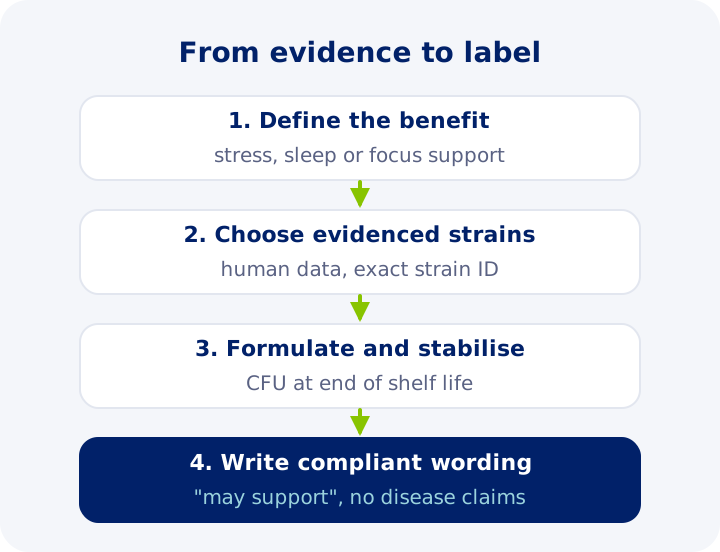
- Define the benefit precisely, for example everyday stress support, rather than a vague “mental health” goal.
- Select probiotic strains with strain-level human data, such as well-documented strains of Bifidobacterium longum where the evidence fits your target benefit.
- Formulate so the count at the end of shelf life matches the studied dose, and validate it with real-time stability data.
- Write label and marketing copy that stays within wellness language and the rules of each market.
Wording is where most risk sits. Compare these examples:
- Avoid: “treats anxiety”, “relieves depression”, “cures brain fog”.
- Prefer, where substantiated and permitted: “may help support a sense of calm”, “supports the gut-brain connection”, “contributes to normal psychological function” for authorised nutrients.
Our article on clinical data and marketing claims for probiotics covers substantiation in more detail.
Tip: Keep a claims file for each product that links every phrase on pack to its supporting study or authorised claim. It saves time with distributors and regulators.
Formats and partner ingredients
Gut-brain products are usually capsules or sachets, which protect live cultures and allow accurate dosing. Gummies and drinks are attractive for daily routines but are much harder for live cultures, so heat-tolerant spore-formers or postbiotics are often used in those formats instead.
Partner ingredients are chosen to give each component a clear role:
- Prebiotic fibres such as inulin, FOS or GOS, which gut bacteria ferment into short-chain fatty acids.
- Digestive enzymes, for meal-related digestive comfort.
- Nutrients with authorised roles, such as magnesium and B vitamins, for the psychological-function claim where permitted.
- Botanicals traditionally used for relaxation, where they are permitted in the target market.
Each addition raises compatibility questions. Magnesium salts and some botanical extracts are hygroscopic, which can draw moisture into a blend and reduce probiotic counts. Screen the full formula in stability trials before fixing the label claim.
Challenges still to solve
- Regulatory classification: depending on wording and dose, a product may fall between supplement and medicine categories in some markets.
- Standardisation: strain identity, CFU methods and enzyme units must be consistent across batches and suppliers.
- Evidence: larger, well-designed human studies are still needed for most strains.
- Consumer education: buyers need clear, honest explanations of what the gut-brain axis can and cannot do.
Working with Enzyme Bioscience
Enzyme Bioscience offers more than 100 enzymes and probiotic strains, with TDS and CoA available for each. Our ENZYVIVE® custom-blend service can combine strains and enzymes in the format you need. Request samples to start development.
Frequently asked questions
The gut-brain axis is the two-way communication network between the gut and the brain. It works through the vagus nerve, immune signalling, the stress-hormone (HPA) system and molecules produced by gut microbes. Researchers often call it the microbiota-gut-brain axis to include the role of gut bacteria.
Psychobiotics is a research term for probiotic strains studied for effects on mood, stress or cognition. Evidence comes from animal studies and a growing number of human trials, but results are strain-specific and the field is still developing. The term itself is not a regulated claim.
Yes, most of the body's serotonin is produced in the gut, mainly by enterochromaffin cells in the intestinal lining. However, gut serotonin does not cross into the brain, so it is wrong to say that gut bacteria directly make the brain's serotonin. The relationship is more indirect.
No. Anxiety and depression are medical conditions, and foods and supplements cannot claim to treat or prevent them. Wellness products may use permitted wording such as 'may help support a sense of calm', backed by evidence for the specific strain and approved for the target market.
Digestive enzymes support the breakdown of proteins, carbohydrates and fats, which may support digestive comfort. In gut-brain products they are a supporting component alongside the probiotic strain, not an active for mood. Claims should reflect that digestive role only.