In the enzyme industry, success is no longer measured by product performance alone. Modern enzyme based brands are expected to tell the whole story demonstrating how their innovations improve lives sustainably and ethically. This means not only delivering cutting-edge biological solutions, but doing so with complete transparency and integrity. For R&D professionals, pharma and probiotic companies, and students in biotech fields, understanding a brand’s commitment to sustainability and integrity is crucial. Enzyme Bioscience and other leaders in this space strive to create unique value for the world by marrying scientific innovation with responsible practices
Sustainability in Enzyme Based Solutions
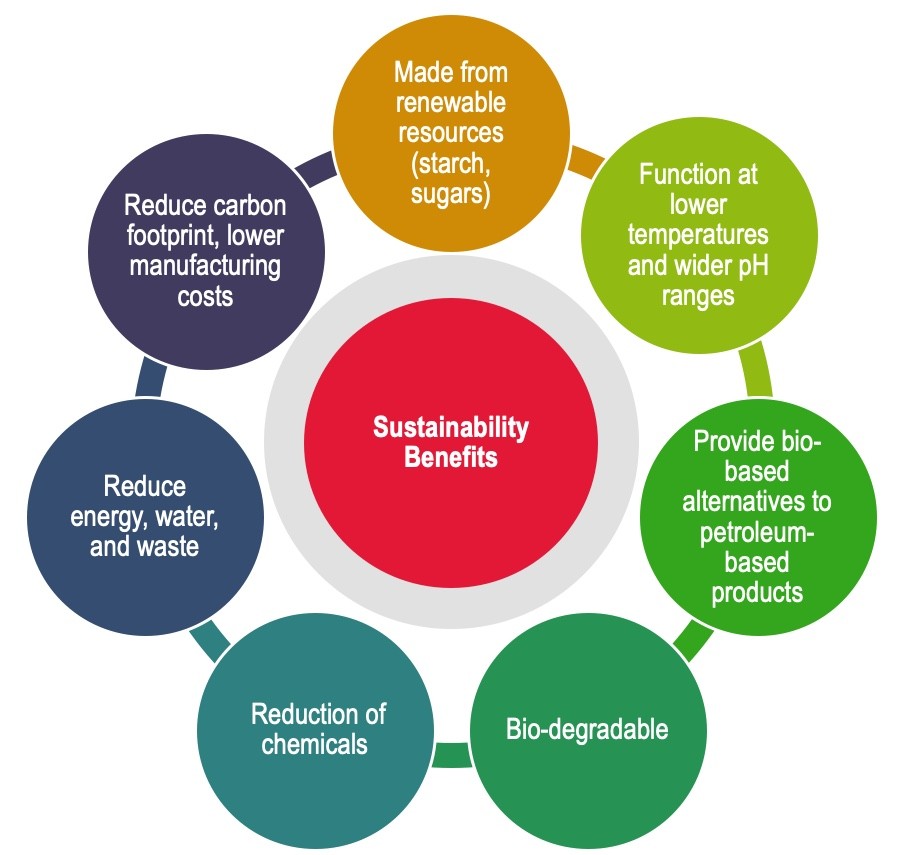
Enzymes are natural catalysts that often make industrial processes greener by design. Replacing harsh chemicals with enzyme-based processes allows manufacturers to reduce their environmental footprint. For example, enzymes enable chemical reactions at lower temperatures and moderate pH, meaning a laundry detergent with enzymes can clean effectively in cold water, saving energy. In industries like textiles and leather, enzymatic treatments achieve results (such as fabric finishing or leather softening) with far fewer toxic chemicals, cutting waste and pollution.
Enzymes them selves are typically biodegradable and non-polluting, so they don’t accumulate in ecosystems aftar. Moreover, enzyme-assisted processes often require less water and time, which further shrinks the carbon and resource footprint. Leading enzyme companies also embed sustainability in their operations – from using renewable energy in production to recycling biowaste – ensuring that the way enzymes are made is as green as the benefits they deliver in use. Embracing sustainability is not just good for the planet; it also drives innovation and efficiency, helping enzyme brands meet the growing demand for eco-friendly solutions in pharmaceuticals, food processing, agriculture, and beyond.
Building Integrity through Transparency
Integrity is the cornerstone of trust for enzyme-based brands. In practice, integrity means being honest about what your products can do and how they are made. Technical stakeholders and customers today are highly informed; they expect data-backed claims and ethical conduct. Thus, enzyme companies must avoid “greenwashing” – the temptation to overstate environmental benefits without proof. Any sustainability claims should be backed by evidence (life-cycle assessments, certifications, etc.), because exaggerated or false claims can undermine Instead, top companies choose transparency: openly sharing their sourcing practices, safety and quality standards, and the real-world impacts of their enzymes. This transparency extends through the supply chain.
For instance, detailing the origin of raw materials and the manufacturing process “tells the whole story” to partners and consumers, fostering trust. Many firms adhere to strict good manufacturing practices (GMP) and obtain independent certifications to validate quality and environmental management – concrete signals that they operate with accountability. In essence, integrity for enzyme brands isn’t just about avoiding wrongdoing; it’s about proactively demonstrating ethical leadership. By communicating openly and upholding high scientific and moral standards, enzyme companies build lasting reputations as reliable, principled innovators.
Enzyme Bioscience: Innovation with Purpose
Enzyme Bioscience exemplifies how sustainability and integrity come together to create unique value. As an innovative manufacturer of enzymes for biopharmaceutical, food, feed, and other industries, Enzyme Bioscience focuses on solutions that help clients improve products in a responsible way. The company leverages fermentation and plant-derived enzyme technology to reduce reliance on harsh chemicals and animal-sourced ingredients. This approach aligns with sustainable principles – using natural catalytic processes to minimize waste and energy use – while also catering to diverse industry needs.
On the integrity front, Enzyme Bioscience maintains strict quality control from raw materials to finished products (supported by a GMP-compliant facility and qualified professionals). By ensuring consistency, safety, and efficacy in every batch, the company builds trust with researchers and industry partners worldwide. Enzyme Bioscience also practices transparency with its stakeholders, sharing knowledge about its enzyme products and their proper use. This educational, service-oriented mindset means the company doesn’t just sell enzymes; it collaborates to solve problems and advance scientific understanding. In doing so, Enzyme Bioscience is “telling the whole story” – showing that through ethical innovation, an enzyme brand can serve the world in a truly positive way.
Conclusion
Sustainability and integrity are more than corporate buzzwords for enzyme-based brands – they are defining features that determine long-term impact and credibility. By developing eco-friendly enzyme solutions and operating with transparency and ethics, companies in this field address global challenges (from reducing industrial pollution to improving health outcomes) while earning the trust of the scientific community and the public.
Telling the whole story means embracing full accountability: celebrating the benefits of enzymes for a greener future, and being candid about the processes and values behind them. When an enzyme brand commits to this holistic approach, it not only differentiates itself in the market but also contributes something genuinely unique and positive to the world. Enzyme Bioscience and its peers demonstrate that with a foundation of sustainability and integrity, biotechnology can be a force for good – advancing industry frontiers hand-in-hand with societal and environmental progress.
References and Further Reading
- Engineering Enzymes for Environmental Sustainability A comprehensive 2023 academic review detailing how engineered enzymes—via directed evolution—are deployed to address environmental challenges like CO₂ capture, plastic degradation, and renewable feedstock conversion. Excellent for understanding enzyme design for sustainability. Biomedres+7PubMed Central+7MDPI+7
- Environmental Assessment of Enzyme Production and Purification A 2021 study assessing the full ecological impact of enzyme manufacturing, emphasizing that waste, water, and energy consumption during production are significant and shouldn’t be overlooked in sustainability analyses. ScienceDirect+6PubMed Central+6enzymetechnicalassociation.org+6
- Does Enzymatic Catalysis Lead to More Sustainable Chemicals? A detailed 2024 Life Cycle Sustainability Assessment (LCSA) comparing enzymatic catalysis to traditional chemical processes—revealing 7‑13 % reductions in environmental impacts like hazardous waste and energy use, along with social benefits such as improved worker safety. PubMed Central+15RSC Publishing+15PubMed Central+15
- Environmental Benefits of Enzymatic Processes: A Literature Review A 2013 literature review analyzing 28 comparative environmental assessments. It illustrates widespread reductions in global warming potential, acidification, eutrophication, and energy consumption when using enzyme-based processes versus conventional methods. ScienceDirect+5ResearchGate+5enzymetechnicalassociation.org+5
- Nature-Inspired Enzyme Engineering and Sustainable Catalysis A 2023 review exploring how enzymes sourced from plants and extremophiles (extremozymes) contribute to environmentally friendly catalysis. Emphasizes their biodegradability, renewable origins, and ability to reduce waste.https://www.frontiersin.org/journals/bioengineering-and-biotechnology/articles/10.3389/fbioe.2023.1229300/full?utm_source=chatgpt.com