
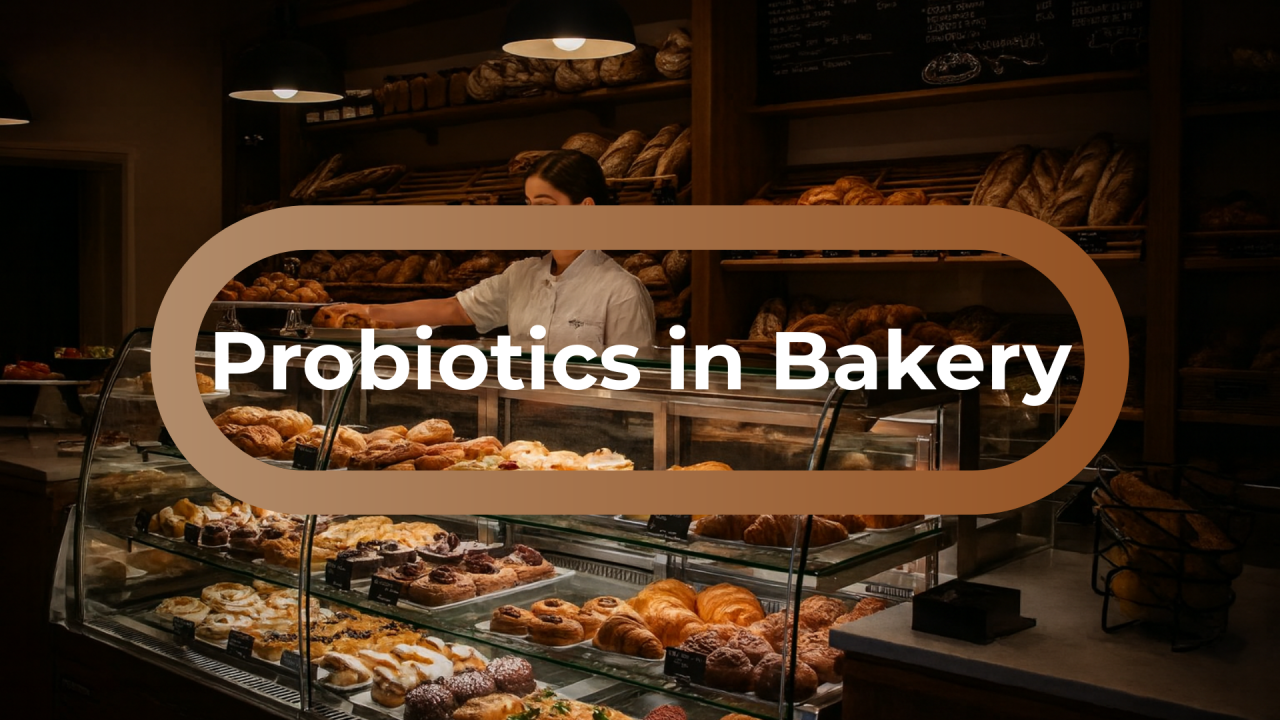
A sliced artisan bread loaf made with sourdough fermentation. Probiotic cultures used in sourdough can improve bread’s texture and keep it fresher for longer. Probiotics – live beneficial microbes – are best known for supporting digestive health. But in the world of baking, these friendly bacteria are proving to be much more than gut-health boosters. An emerging trend in food science is to harness probiotic cultures (and their by-products) to improve baked goods themselves. This means going beyond digestion and using probiotics to naturally extend a product’s shelf-life and enhance its texture. Companies like Enzyme Bioscience are pioneering such innovations, creating unique solutions that merge health science with bakery technology in a positive way.

Probiotics as Natural Preservatives in Bread
Baked goods, especially breads, are prone to spoilage and staling. Traditionally, chemical preservatives have been added to prevent mold and extend shelf-life. Now, probiotic lactic acid bacteria (LAB) offer a bio-based alternative. When used in fermentations (such as sourdough starters), LAB produce organic acids and other bioactive compounds that inhibit mold . The acidic environment and antimicrobial metabolites (like lact, acetic, and phenyllactic acids) act as natural preservatives.
Research reviews have shown that incorporating LAB-fermented sourdough into bread can significantly prolong mold-free . For example, one study found that using a Lactobacillus culture in sourdough extended bread’s shelf-life by nearly a week compared to control . Such probiotic-driven bio-prservation helps keep baked products fresher for longer without relying on artificial additives. This aligns with clean-label trends and consumer demand for “natural” .

Enhancing Texture and Quality with Probiotic Fermentation
Beyond preventing spoilage, probiotic cultures can improve the texture and eating quality of bakery products. During fermentation, certain LAB (including known probiotic species) produce exopolysaccharides (EPS) – long-chain sugars that act as natural hydrocolloids. These EPS can bolster the dough’s viscoelastic properties, leading to softer crumb and improved moisture retention in . In fact, EPS frm sourdough LAB have been shown to improve bread texture and slow down staling, effectively extending softness and . This natural texturizing effect can reduce the need for added gums or emulsifiers.
Fermentation with probiotic cultures also yields enzymes and peptides that modify starch and gluten in dough, often resulting in a finer crumb structure and enhanced flavor profile. By leveraging these biological processes, bakers can achieve a pleasantly tender texture and rich taste in products – all thanks to the hidden work of microbes. As a recent review highlighted, even heat-killed probiotic cultures (or their fermented extracts) can deliver improved texture, flavor, and freshness in bakery items via their residul .

Innovative Approaches and the Enzyme Bioscience Edge
Formulating probiotic-enriched baked goods does come with challenges, chiefly the high oven temperatures that can destroy live bacteria. Innovative solutions are making it feasible to get the benefits of probiotics without compromising baking integrity. One approach is using heat-resistant probiotic strains such as Bacillus coagulans, which forms hardy spores. These spore-formers can survive baking and remain viable in the final . Another strategy is microencapsulation – coating probiotic cells with protective materials (e.g. lipid or polysaccharide layers) to shield them from heat and oxygen.
Encapsulated probiotics have not only shown higher survival, but in some cases also actively inhibited mold growth in baked goods, contributing to longer shelf . Even when probiotics don’t survive the baking, their fermentation by-products (sometimes termd postbiotics) remain in the bread, exerting antioxidant and antimicrobial effects that benefit shelf-life and . This means bakers can capture the “functional fermentation” advantages without necessarily needing live cultures in the finished food. At Enzyme Bioscience, such cutting-edge techniques are at the core of creating and delivering unique, value-added ingredients to the world. By blending probiotic science with enzyme technology, they develop bakery solutions that naturally keep products fresher, tastier, and more wholsome.
Conclusion
In summary, the use of probiotics in bakery is opening up exciting possibilities far beyond digestive health claims. Through natural fermentation processes, probiotic LAB and their metabolites act as preservative and texturizing agents – extending mold-free shelf-life, maintaining softness, and enriching flavor in breads and other baked goods. This aligns with industry goals to replace synthetic aditives and meet consumer expectations for clean-label, high-quality .
What was once only about gut health is now about improving the food itself. With ongoing R&D from organizations like Enzyme Bioscience, probiotic and enzyme innovations are poised to revolutionize bakery formulations. The result is a win–win: bakers get more resilient and appealing products, while consumers enjoy longer-lasting, naturally enhanced baked goods. Embracing these scientific advancements fosters a positive step toward healthier and more sustainable food solutions for everyone.
References & Further Reading
- Hernández-Figueroa R et al. (2023). Sourdoughs as Natural Enhancers of Bread Quality and Shelf Life: A Review. Fermentation (MDPI). https://www.mdpi.com/2311-5637/10/1/7
- Asqardokht-Aliabadi A et al. (2025). Postbiotics in the Bakery Products: Applications and Nutritional Values. Probiotics & Antimicrobial Proteins. https://doi.org/10.1007/s12602-024-10327-y
- Reffai Y M & Fechtali T. (2025). A Critical Review on the Role of Lactic Acid Bacteria in Sourdough Nutritional Quality: Mechanisms, Potential, and Challenges. Applied Microbiology. https://doi.org/10.3390/applmicrobiol5030074
- Oleinikova Y et al. (2025). Sourdough Microbiota for Improving Bread Preservation. Foods (MDPI). https://www.mdpi.com/2304-8158/14/14/2443
- “Biopreservation.” (2025). Wikipedia.https://en.wikipedia.org/wiki/Biopreservation?utm_source=chatgpt.com
1 thought on “Probiotics in Bakery: Beyond Digestion, Enhancing Shelf-Life & Texture”
This post is very informative and easy to understand. Thanks for making it beginner-friendly.