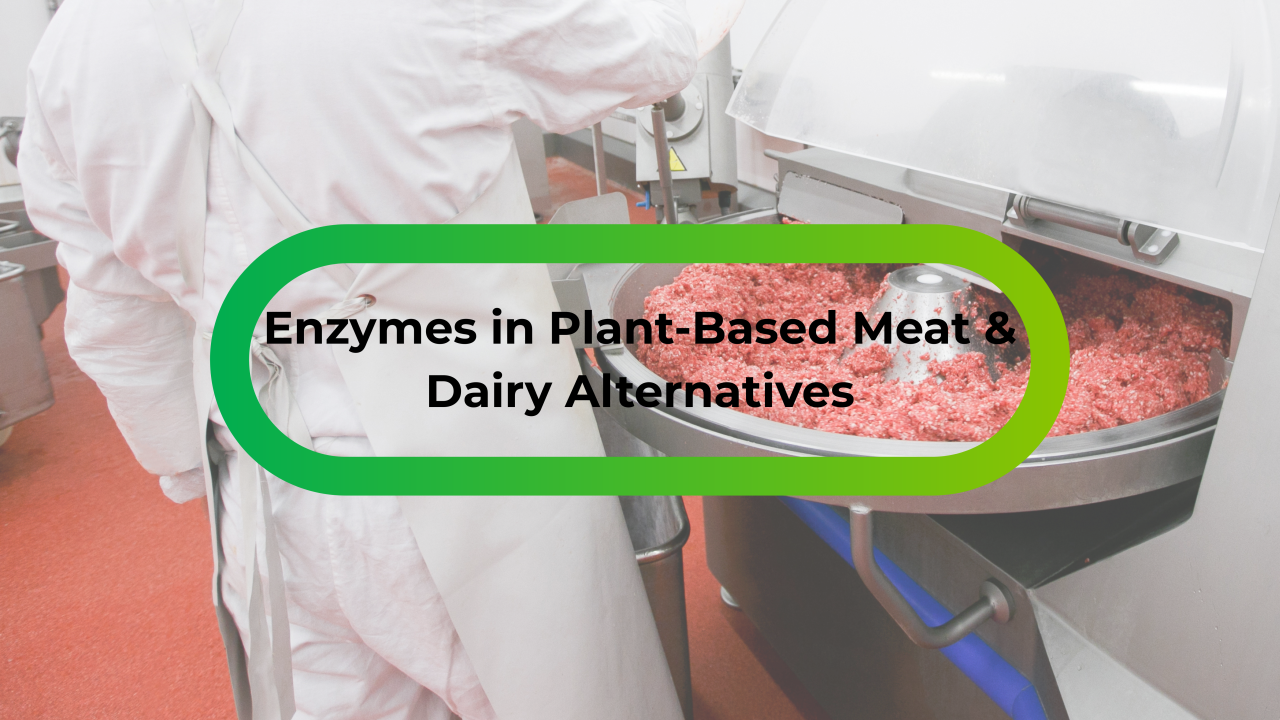
Plant-based meat and dairy alternatives have surged in popularity as consumers seek sustainable and healthy options. Yet replicating the taste, texture, and nutritional profile of animal products remains a technical challenge. Enzymes – nature’s biocatalysts – are emerging as game-changers in this field. At Enzyme Bioscience, we harness these powerful tools to create unique, eco-friendly solutions that elevate plant-based foods. This educational overview explores how enzymes are transforming meat and dairy alternatives, helping producers deliver authentic sensory experiences in a sustainable, clean-label way.
Enzymes Transforming Plant-Based Meat

A plant-based burger patty – enzymes help improve the texture and binding of such meat alternatives. Enzymes address several hurdles in meat analogs. Proteases, for example, hydrolyze plant proteins (like soy, wheat, or pea) to improve their solubility and reduce off-notes such as . By breaking proteins into peptides and amino acids, proteases can release savory “umami” flavors and enhance . This controlled protein softening also tenderizes the product, giving plant-based meat a juicier, more meat-like bite instead of an overly chewy .
Another critical enzyme is transglutaminase, often called “meat glue.” It cross-links proteins, binding plant protein pieces together into a cohesive matrix. The result is improved firmness, sliceability, and bite – much like the structure of real meat. By using transglutaminase, formulators can create patties, nuggets, or deli slices that hold together well without relying on synthetic binders like . This enzymatic binding not only improves texture and juiciness but also supports clean-label recipes by replacing artificial additives.
Innovative solutions are continually emerging. For instance, oxidative enzymes such as laccase have been used with natural ingredients to further mimic meat properties. A recent approach cross-links plant proteins with a plant-derived polymer (pectin) using laccase, dramatically improving the shape retention and binding in meat alternatives without chemical . The same enzyme can trigger browning reactions (when combined with natural colorants) to simulate the appealing color change of meat during .
Enzymes can even help neutralize or mask undesirable plant notes – effectively reducing the “beany” or raw flavor of legume proteins. These advances, backed by both industry and academic research, are closing the sensory gap between plant-based products and their animal-based counterparts. (Notably, University of Minnesota food scientists recently employed enzyme treatments to modify pea protein for a more realistic beef-like .)
Enhancing Plant-Based Dairy Alternatives
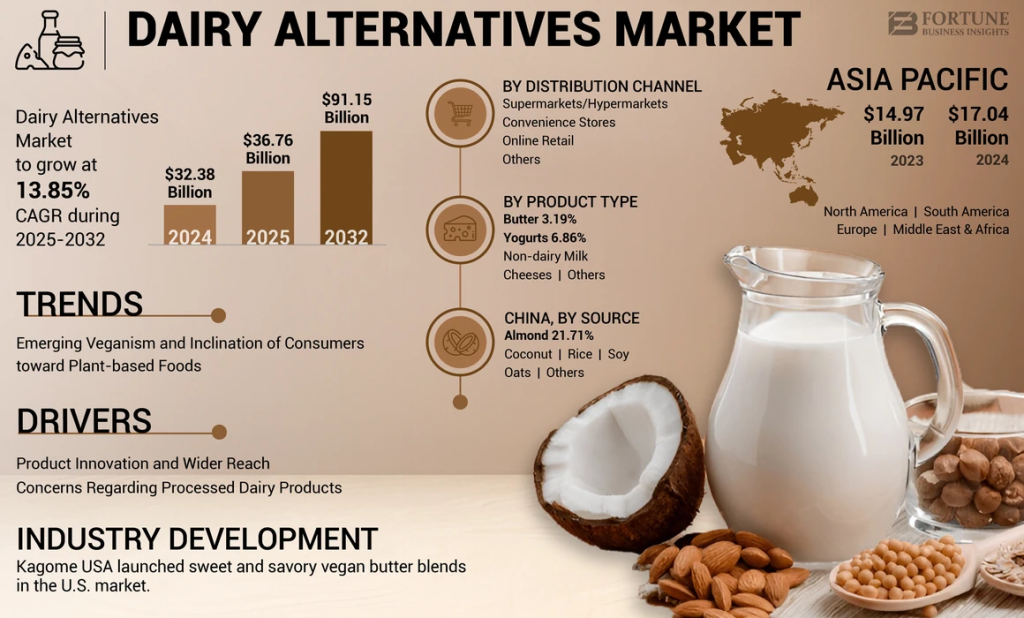
Plant-based oat milk relies on enzymes to break down starches and fibers for a smooth, creamy beverage. Enzymes also play a vital role in creating convincing dairy alternatives such as plant-based milks, yogurts, and cheeses. A primary challenge with alternatives like oat, soy, or almond milk is achieving the right consistency and taste. Plant ingredients often contain starches and fibers that can make a beverage thick or slimy, and proteins that are less soluble than in animal milk.
Here, enzymes come to the rescue: amylases and glucoamylases break down complex starches into simpler sugars, thinning the liquid and naturally adding mild . This mimics the slight sweetness of dairy (lactose) without adding sugar, while also improving mouthfeel. In oat milk production, for example, amylase is the “quiet hero” converting oat starch that would otherwise make the drink gelling or “gloopy”.
Similarly, cellulase enzymes target plant fibers (such as β-glucans in oats or other cereal grains). By hydrolyzing these fibers, cellulases reduce viscosity and grit, yielding a smoother, creamier milk-like . Proteases are another key: they partially break down storage proteins in plant bases (soy, pea, etc.) to increase protein . This prevents sedimentation and chalkiness, allowing manufacturers to fortify plant-based milks with higher protein levels while maintaining a pleasant consistency.
In plant-based fermented products like non-dairy cheese or yogurt analogs, proteases and lipases can be used to develop flavor complexity similar to aged cheeses, by generating peptides and fatty acids that impart cheesy or tangy notes during fermentation. Transglutaminase also finds use in these dairy alternatives – for instance, to firm up vegan cheese or yogurt gels by cross-linking plant proteins, improving sliceability and . Through these enzymatic interventions, alternatives such as almond yogurt or cashew cheese can achieve a creamier texture and richer flavor akin to their dairy counterparts.
Innovating with Enzyme Bioscience
From replicating the savory tenderness of meat to crafting the creamy sweetness of milk, enzymes are enabling a new wave of plant-based innovation. This enzymatic approach aligns perfectly with clean-label and sustainability trends: it uses naturally derived catalysts to replace chemical additives and heavy processing. Enzyme Bioscience is at the forefront of this movement, leveraging years of enzyme expertise to develop tailor-made solutions for the plant-based food industry.
By applying advanced enzyme technology, we help R&D teams and manufacturers create products that not only meet but exceed consumer expectations for taste, texture, and nutrition. In doing so, Enzyme Bioscience is serving something truly unique to the world – empowering a food system that is healthier, more sustainable, and remarkably close to nature’s originals, all through the science of enzymes.
References and Further Reading
- Sun, W., et al. (2023). Application of Plant Proteases in Meat Tenderization. Foods, 12(6), 1192. Read here
- Arshad, M. S., et al. (2016). Plant and Bacterial Proteases: A key towards improving meat tenderization. Cogent Food & Agriculture, 2(1), 1261780. Read here
- Silva, A. R. A., et al. (2025). Plant-Based Milk Substitutes: Sources, Production, and Nutritional, Nutraceutical and Sensory Qualities. Frontiers in Food Science & Technology, 2, 1593870. Read here
- Chen, M., et al. (2024). Nutritional Quality of Animal and Plant-Based Milk Alternatives: A Focus on Protein. Frontiers in Nutrition, 11, 1378556. Read here
- Singh, B., et al. (2023). Plant-Based Dairy Alternatives—A Future Direction to the Market. Foods, 12(9), 1883. Read here