Brewing beer relies on a cascade of natural and added enzymes to convert grains into alcohol, CO₂, and the flavors we expect. In the mash, diastatic enzymes (α- and β-amylase) break down starches into dextrins and fermentable sugars, setting the beer’s body and alcohol . Proteases (proteinases and peptidases) cleave grain proteins into amino acids, releasing free nitrogen that yeast need and also affecting beer foam and . Brewers often supplement with commercial glucoamylases or glucanases to boost extract and improve wort . These enzymatic tools allow breweries to use diverse malts and adjuncts (grains, sugars, etc.) more efficiently while optimizing mash efficiency and
Optimizing Fermentation and Flavor
After mashing, specialized enzymes fine-tune the fermentation and flavor profile. Yeast themselves carry β-glucosidase and β-lyase enzymes that transform hop compounds into aroma . For example, β-glucosidase can release monoterpene alcohols (citrus and floral notes) by cleaving hop glycosides, while β-lyase can free tropical thiol aromas from hop . Brewers may also add enzymes: for instance, acetolactate decarboxylase (ALDC) rapidly converts the yeast-produced diacetyl precursor into flavorless acetoin, preventing the buttery diacetyl . This not only improves taste but also shortens conditioning time and saves . Similarly, adding glucoamylase yields more fermentable sugar to ensure a complete, predictable fermentation, while targeted protease boosts yeast nutrition (free amino nitrogen) to keep fermentation strong and
Managing Foam and Clarity
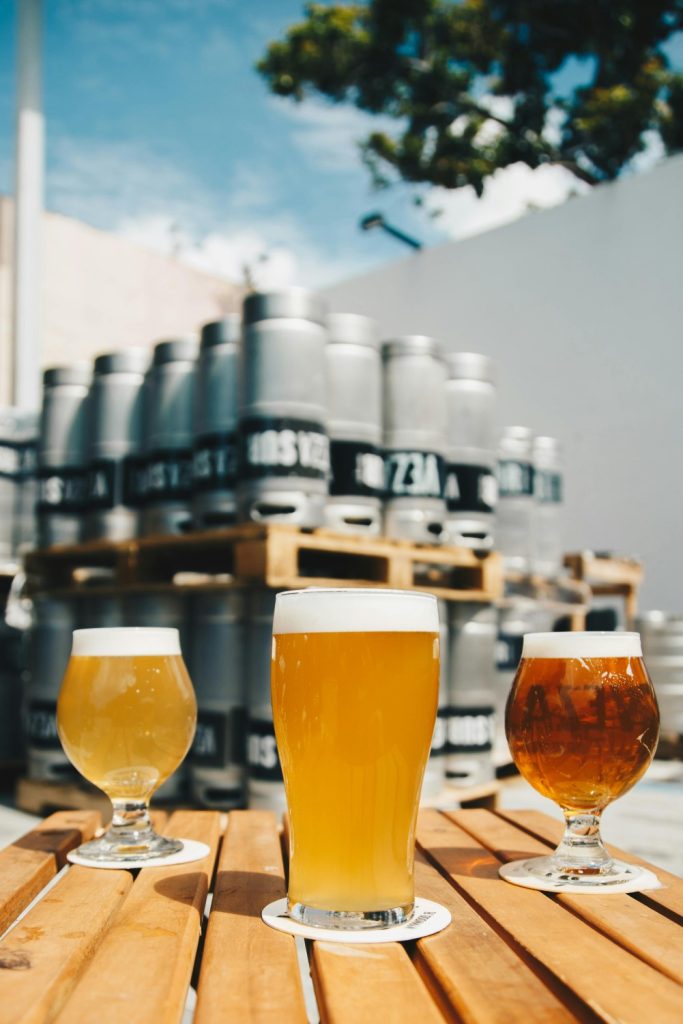
Enzyme use must be balanced carefully to preserve beer foam and clarity. Foam stability derives from specific malt proteins (like Protein Z, hordeins, and LTP1) binding with iso-α-acids and CO₂. Moderate protease treatment can improve clarity by breaking haze-active protein–polyphenol , but excessive proteolysis will deplete foam-positive proteins and weaken head . Brewers often optimize the mash (protein rest) rather than overusing enzymes, ensuring enough foam-active proteins remain. β-Glucanase helps prevent haze and improve lautering by clearing β-glucans, also contributing to a brighter . In practice, brewers calibrate enzyme dosages: a slight protease addition enhances fermentability and clarity without “over-diluting” the . If needed, anti-foam or foam-stabilizing agents are used during boiling or fermentation to further protect the head, especially in high-CO₂ styles.
Innovation and Industry Impact
Today’s enzyme biotechnology brings unique solutions to brewers worldwide. Companies like Enzyme Bioscience develop tailored enzyme blends that remain active under brewing conditions (heat, pH, alcohol) to address every step of the process. For example, their high-activity amylases improve malt conversion, while specialized proteases are formulated for clarity without sacrificing foam. Using these advanced enzymes lets breweries reduce brewing time, increase yield, and consistently achieve desired flavor and foam . In this way, enzyme bioscience serves the brewing industry by creating innovative tools that enhance quality and sustainability.
Brewers from craft to large-scale operations leverage these enzymes to experiment with new recipes (low-carb beers, novel adjuncts, etc.) while ensuring robust fermentation and balanced sensory profiles. The synergy of traditional brewing science with modern enzyme technology exemplifies how knowledge of enzymes continues to positively transform the beer industry.
Beyond process efficiency, enzymes also contribute to sustainability in brewing. By improving starch conversion, reducing energy demand during mashing and boiling, and enabling the use of locally available adjuncts such as rice, corn, or sorghum, enzymes help breweries lower costs and environmental impact. This means less raw material is wasted, more extract is recovered from each batch, and brewers can craft diverse beer styles without compromising quality. As brewing continues to evolve, the role of enzymes will only grow, combining tradition with biotechnology to support both creativity and responsibility in the industry.
Reliable References & Further Reading
- Alpha Acetolactate Decarboxylase (ALDC) – Lallemand Brewing https://www.lallemandbrewing.com/en/united-states/products/abv-alpha-acetolactate-decarboxylase/ Lallemand Brewing
- “Improved performances and control of beer fermentation using encapsulated alpha-acetolactate decarboxylase and modeling” — C. Dulieu, M. Moll, J. Boudrant, D. Poncelet; Biotechnology Progress, 2000. PubMed
- “Understanding the Science Behind Beer Foam – Advanced Brewing” — Brew Your Own Magazine (BYO) Brew Your Own
- In Search of Perfect Foam — Brew Your Own Magazine article on foam, ingredient effects, technique etc. Brew Your Own
- Investigating Beer Foam using BeScan Lab – Bettersize Instruments — Application note / knowledge center article describing foam stability measurements. Bettersize Instruments Ltd.